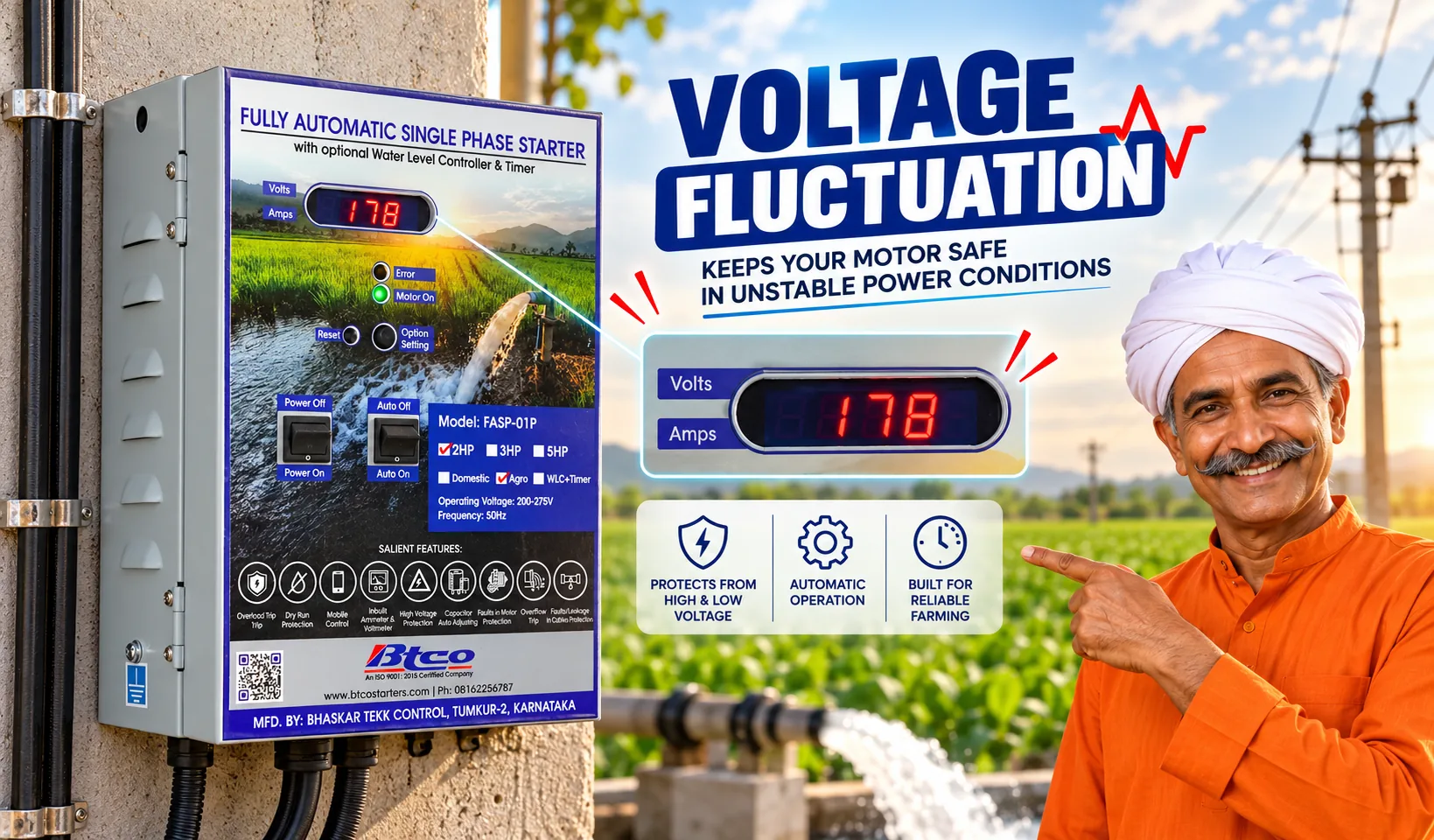
On a long farm line, the voltage is rarely steady. It drops in the evening when every motor in the village is running, and jumps when the load goes off. Every swing makes your submersible motor draw more current than it should and run hot, and a motor that keeps running hot burns. Here is how voltage fluctuation damages a motor, and how a BTCO starter stops the motor before the winding burns.
What is voltage fluctuation protection?
Voltage fluctuation protection switches the motor off when the supply voltage goes too high or too low for the motor to run safely. A BTCO starter does this by watching what really matters to the motor: the current it draws. Whatever the voltage does, if it pushes the current out of the safe range, the starter stops the motor before it overheats.
How high and low voltage burn a submersible motor
- Low voltage: the motor has to draw more current to lift the same water. The winding heats up, and the motor may struggle or fail to start. Run it like this every day and the insulation weakens until the motor burns.
- High voltage: the motor also runs hot, and the insulation of the winding is stressed. A big surge can damage it at once.
- Unbalanced voltage: when one phase is much lower than the others, one part of the winding carries more current and overheats first.
Deep in the borewell, you can’t see any of this happening. That is why the protection has to be in the starter.
Why the voltage swings on farm lines
- Long lines from the transformer to the field, so the voltage drops by the time it reaches your motor
- Many motors on one transformer, especially when they all run at the same time
- Power coming back after a cut, when many motors start together and pull the voltage down
- Load going off suddenly, which can push the voltage up
How a BTCO starter protects your motor from voltage fluctuation
| What happens on the line | What the BTCO starter does |
|---|---|
| Voltage too low, motor draws too much current | Stops the motor when the current goes over the trip amps: Overload Trip |
| Voltage too high, motor runs hot | Stops the motor when the current goes out of the safe range: Overload Trip |
| One phase much weaker than the others | Stops the motor on uneven current: Ground/Imbalance |
| One phase missing (fuse blown, wire cut) | Stops the motor: Mains Problem |
| Power comes back after a cut | Waits for the auto start delay you set (with the auto switch ON) before starting the motor |
| Single phase motor, voltage too low or too high | The Single Phase starter’s low and high voltage protection stops the motor |
Because a BTCO starter trips on the motor’s current, it reacts to what the voltage is actually doing to your motor, and stops it before the winding overheats. The 3 phase and Combined starters even learn the motor’s healthy current the first time they are connected.
See the voltage for yourself
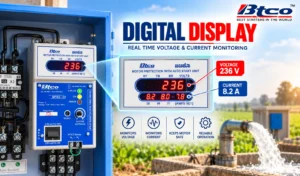
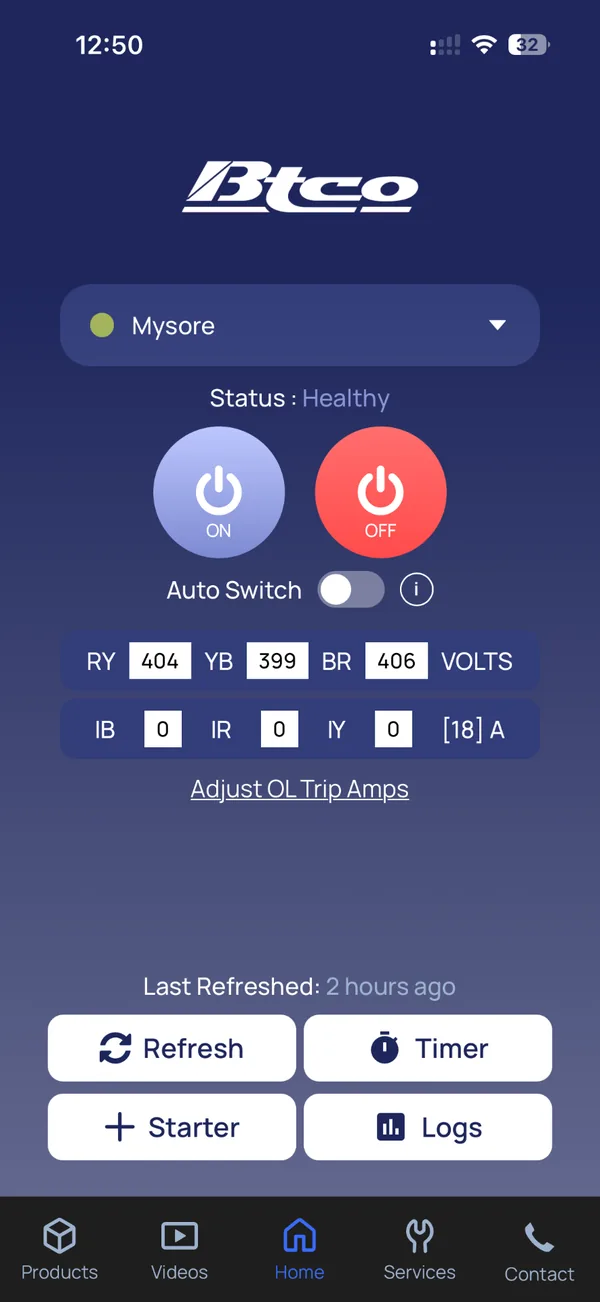
Every BTCO starter has a digital display that shows the volts on each phase (RY, YB and BR on the 3 phase starters) and the motor’s amps. If the volts on your line keep dropping in the evening, you’ll see it on the display, long before it becomes a burnt motor. With the BTCO GSM Module, you can check the volts and amps from your phone in the BTCO Starters app.
Single phase motors: low and high voltage protection
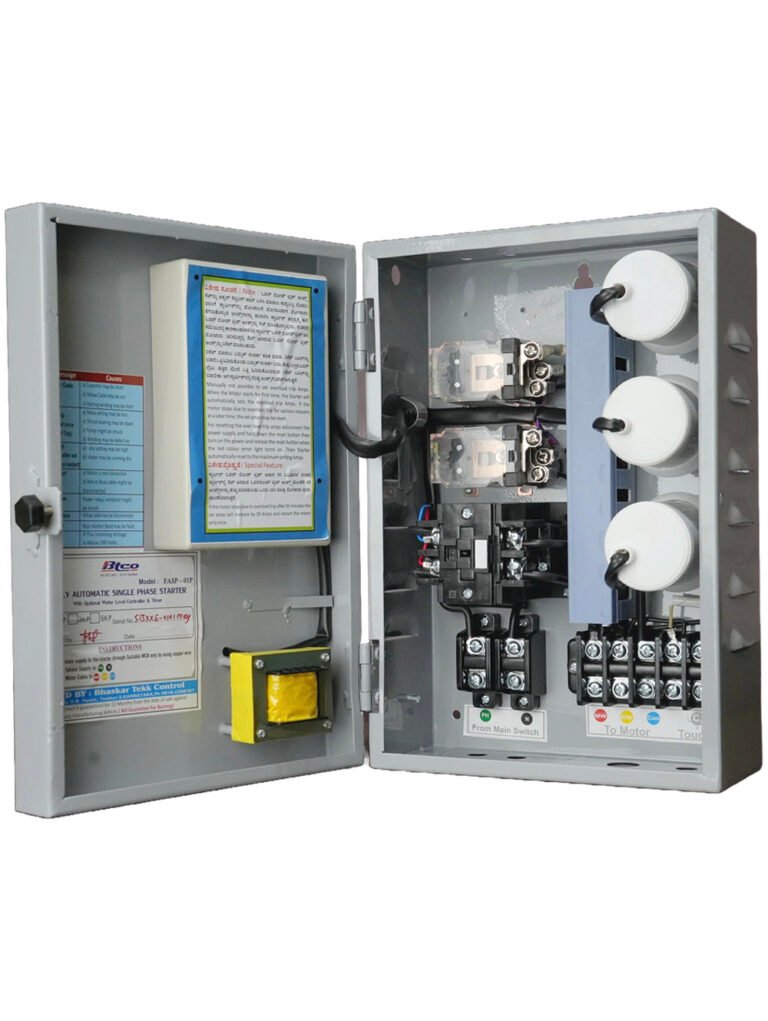
Single phase lines often have the worst voltage. The BTCO FASP-01 Single Phase starter has dedicated low voltage and high voltage protection: it switches the motor off when the supply goes too low or too high. It also protects against dry run, overload and a shorted capacitor, and shows the volts and amps on its display. It suits single phase submersible motors from 2 to 5 HP.
Voltage stabilizer or starter protection?
Many farmers ask whether they need a stabilizer for their submersible pump. The two do different jobs. A stabilizer tries to correct the voltage coming in. A BTCO starter protects the motor: it stops the motor when the current goes out of the safe range, whatever the cause, and it also protects against dry run, single phasing, overload, earth faults and cable faults. If you are not sure what your line needs, call us with your motor and supply details.
Which BTCO starters protect against voltage fluctuation
| Your motor | BTCO starter | Voltage protection |
|---|---|---|
| 3 phase, single cable, 3–10 HP | DOL-03 fully automatic DOL starter | Trips on current, imbalance and missing phase |
| 3 phase, double cable, 7.5–30 HP | FASD-03 fully automatic star delta starter | Trips on current, imbalance and missing phase |
| 3 phase, single cable, 3–10 HP, on juice line, 2 phase or 3 phase | DOL-2/3 Combined juice starter | Trips on current, imbalance and missing phase |
| 3 phase, double cable, 7.5–25 HP, on 2 phase or 3 phase | FASD-2/3 Combined star delta starter | Trips on current, imbalance and missing phase |
| Single phase, 2–5 HP | FASP-01 Single Phase starter | Low and high voltage protection, plus overload |
| You already have a 3 phase DOL or star delta starter | MPAU auto start unit | Trips on current, imbalance and missing phase |
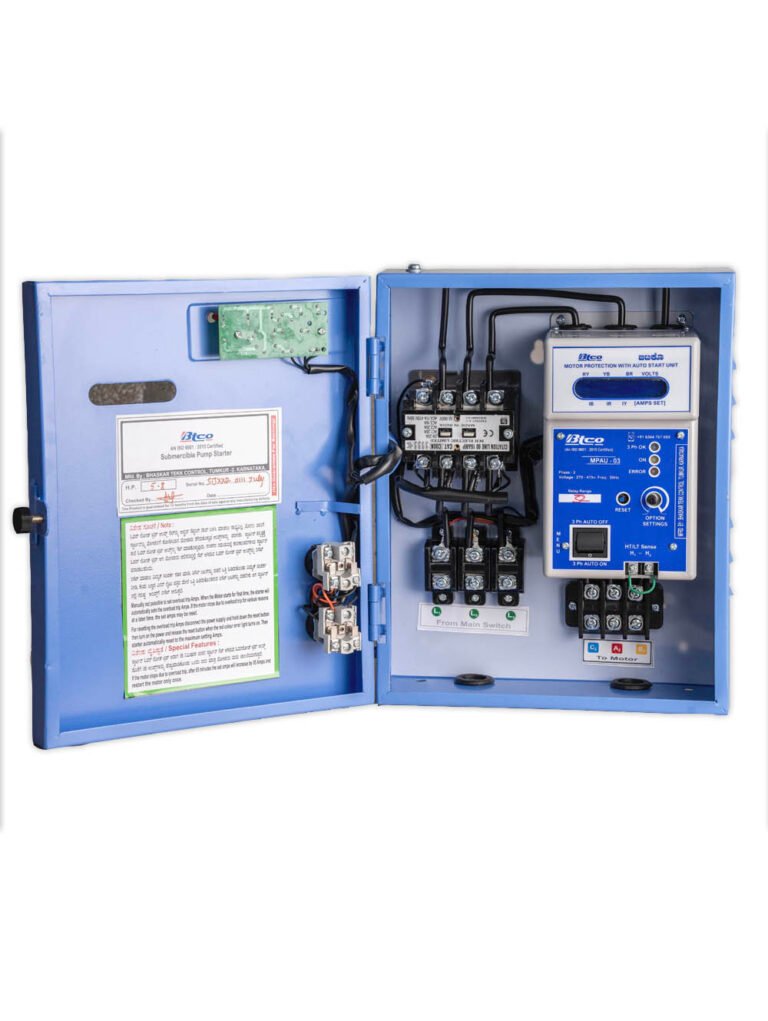
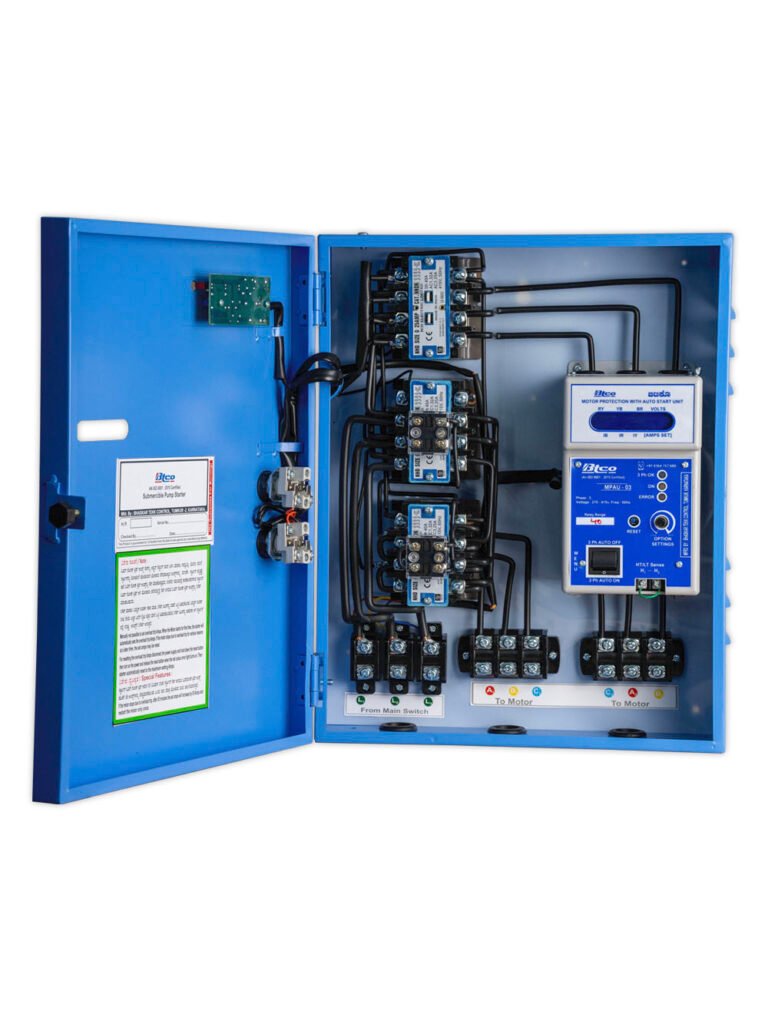
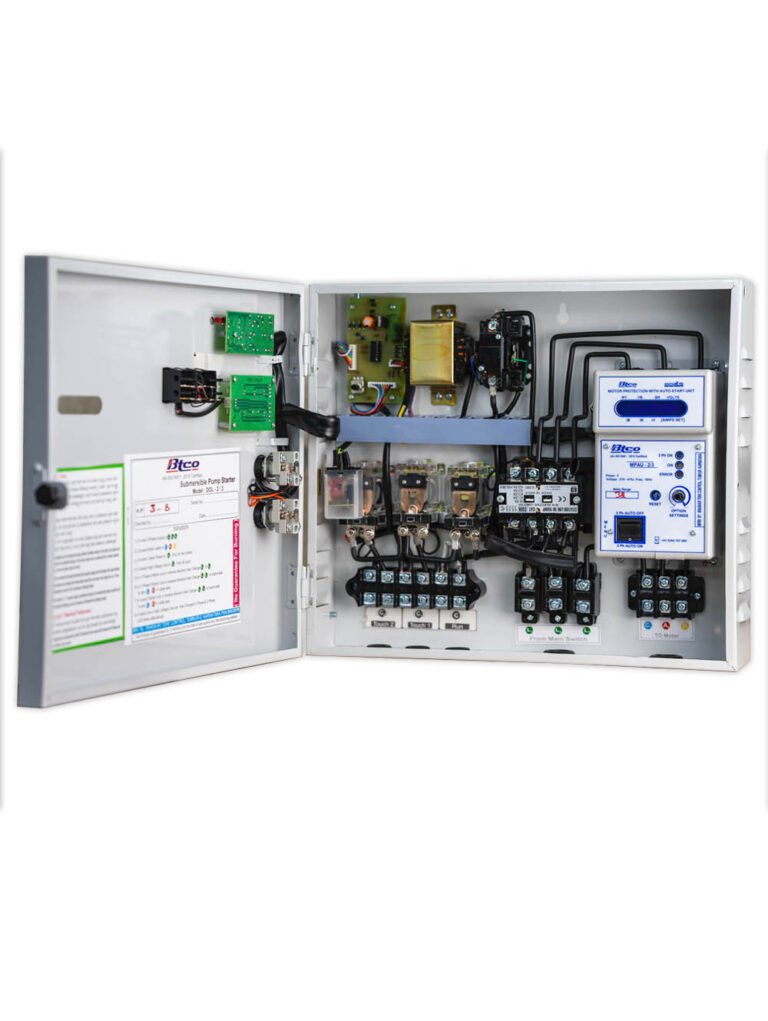
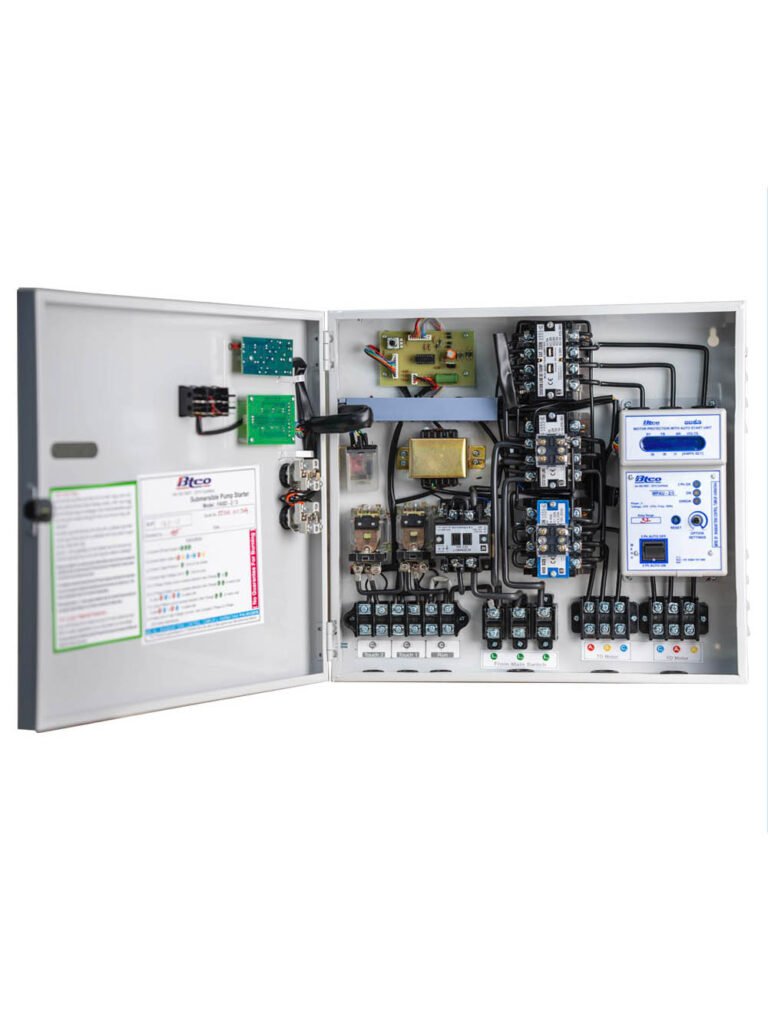
Already have a 3 phase starter? Add the BTCO MPAU to protect your motor from voltage fluctuation, single phasing, dry run and overload, with a display that shows the volts and amps.
Voltage is one of several faults that burn motors. See every protection your motor needs in our submersible motor protection guide, read about single phasing protection and overload protection, and find out why submersible motors keep burning, and how to stop it.
Frequently asked questions
Does a BTCO starter protect my motor against voltage fluctuation?
Yes. BTCO starters trip the motor based on the current it draws. When the voltage goes too high or too low, the motor’s current goes out of the safe range and the starter stops the motor before it overheats. The Single Phase starter also has dedicated low and high voltage protection.
What happens to a submersible motor at low voltage?
At low voltage the motor draws more current to do the same work, so the winding heats up. It may also struggle or fail to start. If it keeps running like this, the insulation weakens and the motor burns.
What happens to a submersible motor at high voltage?
High voltage also makes the motor run hot and stresses the insulation of the winding. Over time, or in a big surge, this burns the motor.
Do I need a voltage stabilizer for my submersible pump?
A stabilizer and a starter do different jobs. A stabilizer tries to correct the voltage. A BTCO starter protects the motor: it stops the motor when the current goes out of the safe range, and also protects against dry run, single phasing, overload and cable faults. Call us with your motor and supply details if you are not sure what you need.
Does the BTCO Single Phase starter have low and high voltage protection?
Yes. The FASP-01 Single Phase starter has dedicated low voltage and high voltage protection, as well as dry run and overload protection, for single phase motors from 2 to 5 HP.
How can I see the voltage at my starter?
Every BTCO starter has a digital display that shows the volts on each phase and the motor current. With the BTCO GSM Module fitted, you can also see the volts and amps in the BTCO Starters app on your phone.
Why does the voltage drop when the power comes back?
When power returns after a cut, many motors on the same line can start at the same moment, and the voltage dips. A BTCO starter waits for the auto start delay you set before it starts the motor, and if the dip pushes the current out of the safe range, it stops the motor.
Protect your motor from the next voltage swing
Call or WhatsApp us with your motor’s HP, single or double cable, and your power supply, and we’ll tell you which BTCO starter protects it. Compare every model on our submersible pump starters page, or visit your nearest BTCO Starters dealer. More answers in our motor starter FAQ.
More videos on our videos page. Follow BTCO Starters on YouTube, Instagram and Facebook.