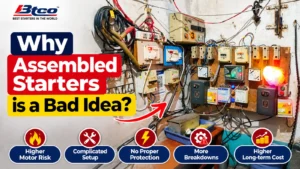


A burnt submersible motor costs a farmer twice: the cost of pulling the pump out and rewinding or replacing the motor, and the days without water while the crop waits. And for many farmers it is not the first time. Most burnt motors are not bad luck. They come from 6 common causes, and a good starter can catch almost all of them before the motor burns. Here is what each cause does inside the motor, the signs to watch for, and how a BTCO starter helps stop it.
- Voltage fluctuation
- Single phasing
- Dry run
- Overload and jammed pump
- Worn bush and bearings
- Weak protection
- Quick table
- After a motor burns
- FAQ
Why submersible motors burn
A submersible motor sits deep in the borewell, cooled by the water flowing past it. It burns when its winding gets too hot for too long and the insulation on the copper wire breaks down. Almost every cause below ends the same way: the motor draws more current than it should, or runs without enough water to cool it, and the heat builds up until the winding burns. That is why a starter that watches the motor current all the time is the best protection you can fit.
The 6 most common reasons a submersible motor burns
1. Voltage fluctuation (low and high voltage)
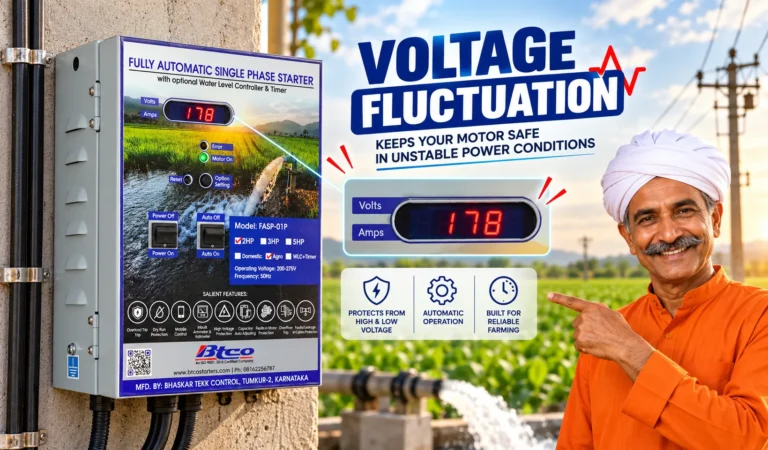
Village power is rarely steady. When the voltage drops, the motor pulls more current to do the same work. When it swings high, the winding is stressed. Either way, the motor runs hotter than it should, and after enough hours the winding burns.
Signs: the motor hums or struggles at start, lights in the house dim when it starts, the amps on the display are higher than normal, and burnouts happen more in the evening or in the season when everyone is pumping.
How a BTCO starter helps: BTCO starters trip on the current the motor draws, so when a voltage swing pushes the current out of the safe range, the starter stops the motor before it burns. That is voltage fluctuation protection. The BTCO Single Phase starter also has separate low and high voltage protection.
2. Single phasing (one phase missing)
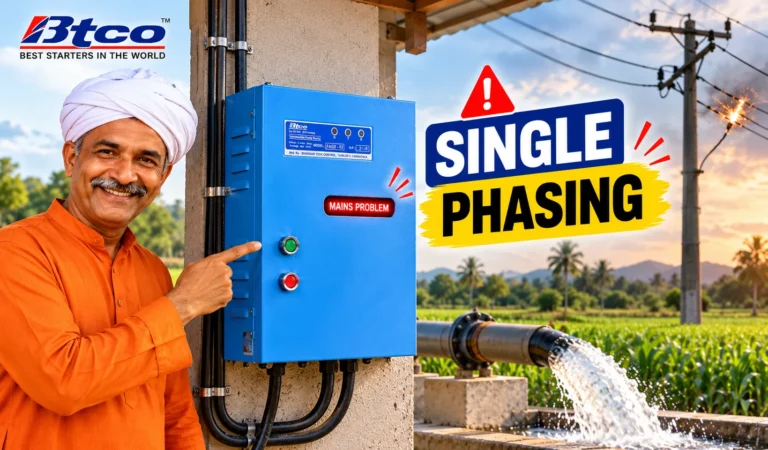
A 3 phase motor needs all three phases. When one goes missing, because a fuse blew, a wire was cut or a jumper burnt on the line, the motor tries to keep running on the other two. It draws far more current on those two phases and burns within minutes if nothing stops it.
Signs: one of the three phase lights on the starter is off, the motor hums but water flow drops, or the motor stops and won’t start again.
How a BTCO starter helps: Every BTCO 3 phase starter is a single phasing preventer. It stops the motor when a phase goes missing and shows Mains Problem on the display. When all three phases are back, it starts the motor again by itself if the starter’s auto switch is ON.
3. Dry run (the borewell runs out of water)
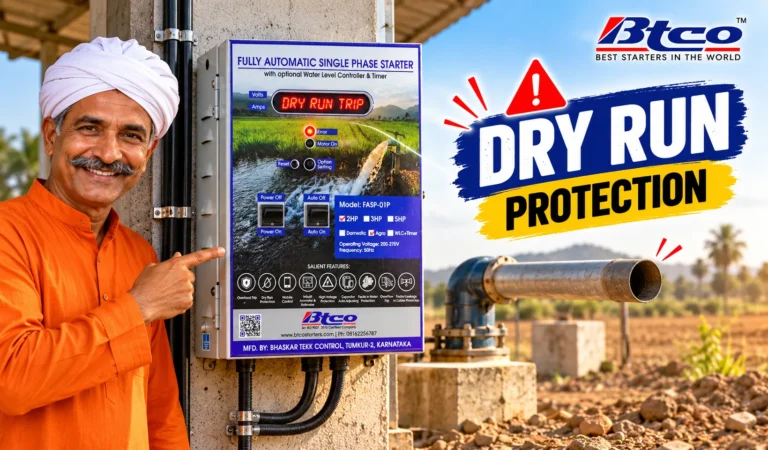
The water flowing past the motor is what keeps it cool. When the water level drops below the pump, often in summer or when nearby borewells are running, the pump sucks air, and the motor keeps running with nothing to cool it. It overheats fast.
Signs: water comes out in bursts with air, the flow gets weaker after the motor has run for a while, and the amps on the display drop below normal.
How a BTCO starter helps: BTCO starters have built-in dry run protection. They notice the dry run from the motor current, with no sensor to lower into the borewell, switch the motor off with Dry Run Trip on the display, and start it again after the dry restart time you set, so the borewell has time to refill.
4. Overload and a jammed pump (sand, mud, debris)
Sand, mud or small stones from the borewell can jam the impeller or make it drag. The motor then works much harder than it was made to, draws extra current and heats up. A pump set too deep, a pipe that is too narrow or a worn pump does the same thing more slowly.
Signs: the amps are higher than the motor’s nameplate, the starter trips on overload again and again, and the water comes out muddy or with sand.
How a BTCO starter helps: Every BTCO starter has overload protection: when the motor draws too much current for too long, it trips before the winding burns, and the display shows Overload Trip. The DOL, star delta and Combined starters learn the motor’s normal current the first time they are connected and set the trip amps by themselves. On the Combined starters, rotor lock protection also stops a stalled motor on 2 phase and juice line. Don’t keep resetting a motor that trips on overload: find out why it trips first.
5. Worn bush and bearings
Inside the motor, the bush and bearings let the shaft turn freely. As they wear, the shaft rubs, friction grows, and the motor needs more current to turn. In the end the rotor can rub against the stator and the winding burns.
Signs: the motor gets noisier, the amps creep up a little more every month, and the starter starts tripping on overload.
How a BTCO starter helps: No starter can repair a worn bearing, but a BTCO starter shows you the warning early. The digital display shows the amps on all three phases, so you can see them rising, and overload protection trips the motor before the extra current burns it. When you see the amps climbing, get the motor serviced before it fails.
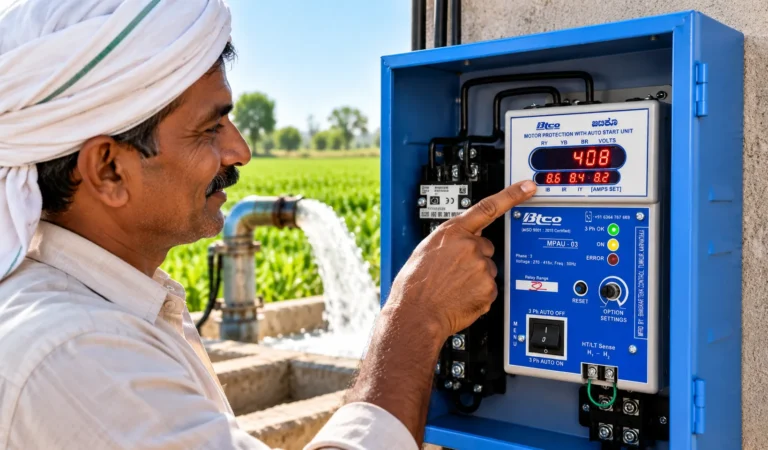
6. Weak protection: old thermal relays and hand-fitted capacitors
Many burnt motors had a starter, but not a protective one. A thermal overload relay heats up slowly and is often set wrong, so it trips too late, or never. On juice line, some farmers run a 3 phase motor by fitting capacitors by hand; wrong or failing capacitors leave the motor running unbalanced, and it overheats.
Signs: the motor burnt even though “the starter never tripped”, the relay setting doesn’t match the motor’s nameplate amps, or the motor runs hot on juice line.
How a BTCO starter helps: BTCO starters are microcontroller based: they measure the current electronically and react in seconds, with the reason on the display. For juice line and 2 phase, the Combined DOL and Combined star delta starters run the 3 phase motor and manage the capacitors automatically (juice line only up to 10 HP).
Quick table: cause, what you notice, what protects the motor
On a phone, swipe the table sideways.
| Cause | What you notice | What protects the motor |
|---|---|---|
| Voltage fluctuation | Motor struggles at start, amps higher than normal | Voltage fluctuation protection (trips on current) |
| Single phasing | One phase light off, motor hums, flow drops | Single phasing preventer (Mains Problem) |
| Dry run | Water in bursts with air, amps drop | Dry run protection with auto restart |
| Jammed pump / overload | High amps, repeated overload trips, sand in the water | Overload protection |
| Worn bush and bearings | Noise, amps creeping up month by month | Digital amps display + overload protection |
| Weak protection | Motor burnt but the starter never tripped | Electronic current sensing; Combined starters on juice line |
What to check after a motor burns, before you fit a new one
If the cause is still there, the new or rewound motor will burn too. Before you lower it into the borewell, ask your electrician to check:
- Voltage on all three phases at the starter, at the time of day you usually pump
- Cable joints and cable size: a loose joint or a cable that is too thin for the length drops voltage and heats up
- Water level and borewell yield: does the borewell run dry after a few hours?
- Overload setting against the motor’s nameplate amps
- Earthing and insulation of the motor and cable
- Sand or mud in the water, and the pump’s condition
Then fit a starter that has dry run, single phasing and overload protection, so the next problem trips the starter instead of burning the motor. See every protection in our submersible motor protection guide.
Which BTCO starter protects your motor
| Your motor and supply | BTCO starter |
|---|---|
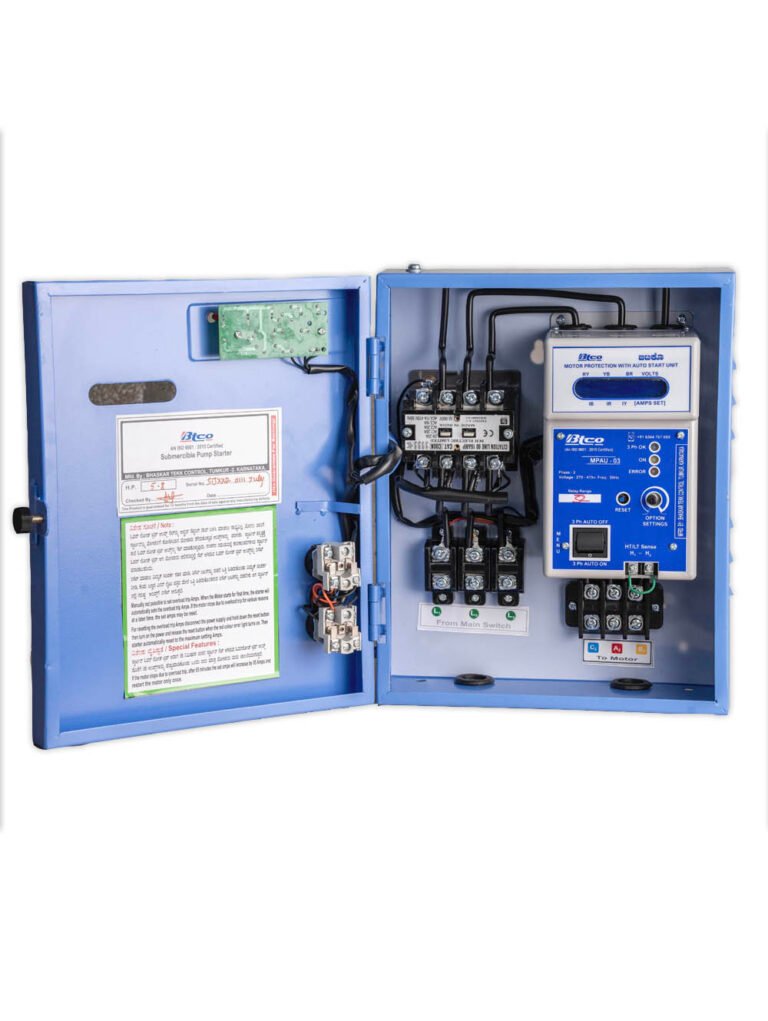
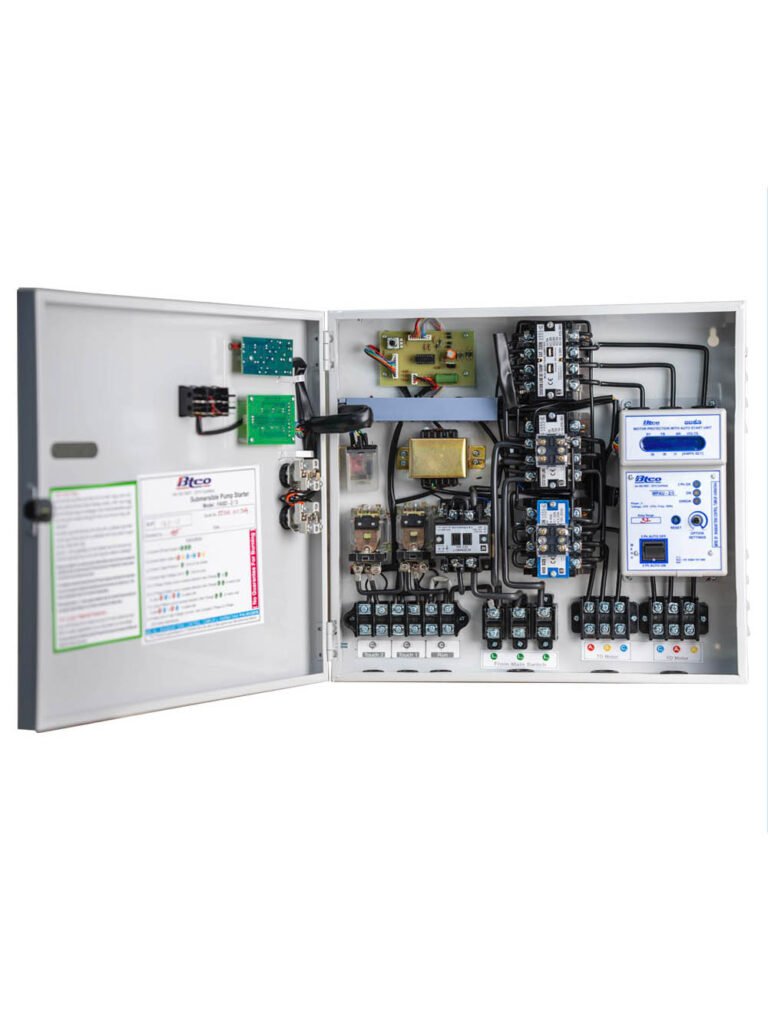
| 3 phase, single cable, 3–10 HP, 3 phase supply | DOL-03 fully automatic DOL starter |
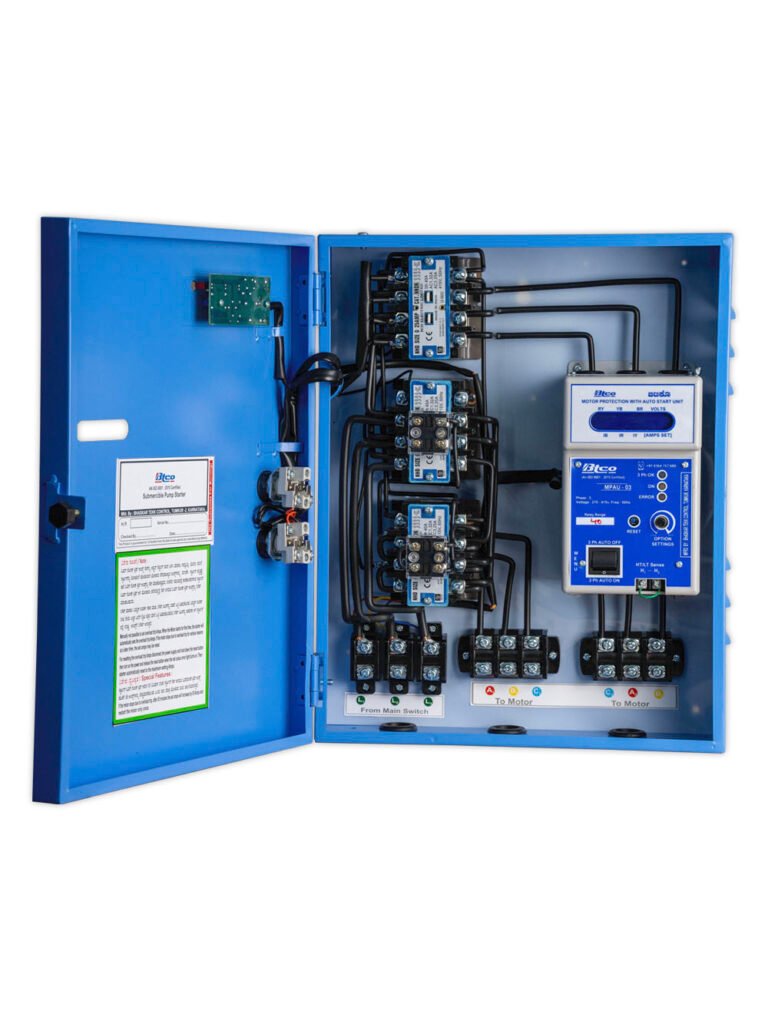
| 3 phase, double cable, 7.5–30 HP, 3 phase supply | FASD-03 fully automatic star delta starter |
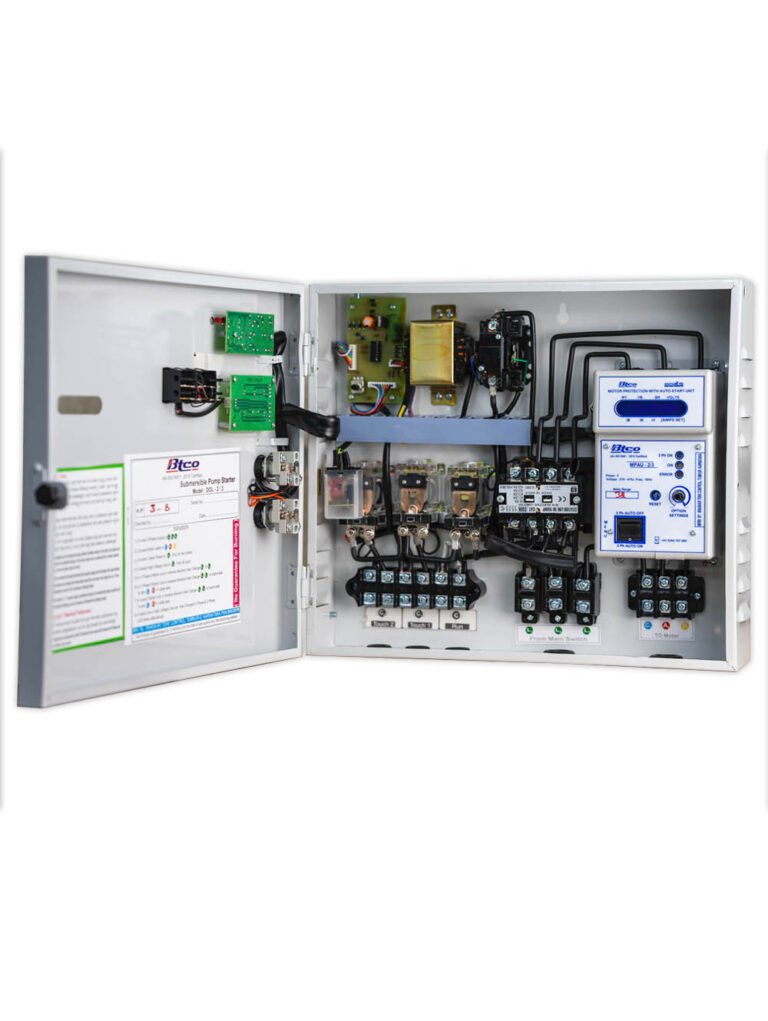
| 3 phase, single cable, up to 10 HP, juice line or 2 phase | DOL-2/3 Combined juice starter |
| 3 phase, double cable, 7.5–25 HP, 2 phase (juice line up to 10 HP) | FASD-2/3 Combined star delta starter |
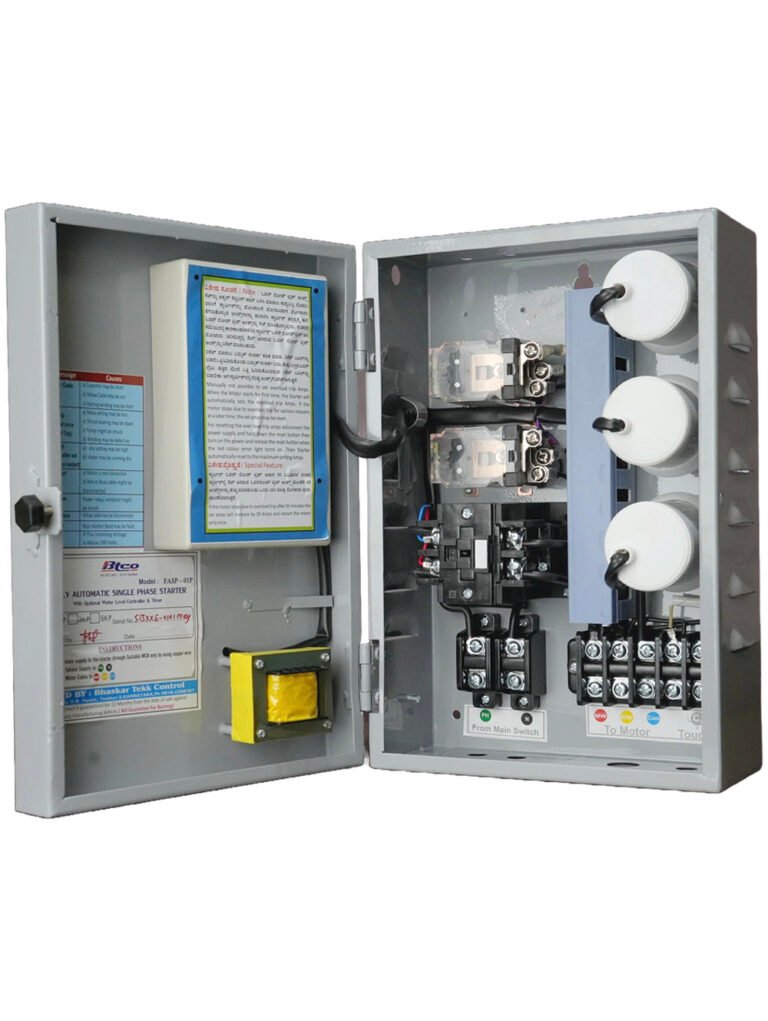
| Single phase, 2–5 HP | FASP-01 single phase starter |
| You already have a 3 phase starter | MPAU auto start unit adds the protection |
Not sure which you need? See which starter your motor needs or DOL vs star delta. Add the BTCO GSM Module to any of them to get an alert on your phone, with the reason, every time the starter trips: a mobile starter.
Frequently asked questions
Why does my submersible motor burn again and again?
Usually because the cause is still there: voltage fluctuation, a missing phase, a borewell that runs dry, sand jamming the pump, worn bearings, or a starter that doesn’t trip in time. Check these before fitting the rewound motor, and use a starter with dry run, single phasing and overload protection so the next problem trips the starter instead of burning the motor.
Can low voltage burn a submersible motor?
Yes. On low voltage the motor draws more current to do the same work and runs hot, and after enough hours the winding burns. BTCO starters trip on the current the motor draws, so they stop the motor when a voltage swing pushes the current out of the safe range. The BTCO Single Phase starter also has separate low and high voltage protection.
Does a starter stop the motor from burning?
A protective starter stops most of the problems that burn motors. A BTCO starter switches the motor off on dry run, single phasing, overload and voltage fluctuation, and shows the reason on its display. It can’t repair a worn bearing or a damaged cable, but it trips before the extra current burns the winding, and its amps display shows the warning early.
How do I know my motor burnt because of dry run?
Signs before the burnout are water coming out in bursts with air, weaker flow after the motor has run a while, and amps dropping below normal. If your borewell level falls in summer, dry run is likely. A BTCO starter shows Dry Run Trip when it stops the motor for this reason.
Is it worth rewinding a burnt motor?
Often yes, but ask your electrician: it depends on the motor’s age, its size and how badly it burnt. Whatever you choose, find and fix the cause first, or the rewound motor will burn again.
Do I need a sensor in the borewell for dry run protection?
No. A BTCO starter notices dry run from the current the motor draws, so there is nothing to lower into the borewell.
Stop your next motor from burning
Call or WhatsApp us with your motor’s HP and your power supply, and we’ll suggest the right BTCO starter. Or visit your nearest BTCO Starters dealer. More answers in our motor starter FAQ.