

Your borewell motor trips on overload, you reset it, it runs for a while and trips again. That trip is a warning: the motor is drawing more current than it safely can, and the extra current turns into heat in the winding. Reset it again and again without finding the cause, and the motor burns. Here are the 7 common reasons a submersible motor trips on overload, what to check first, and how a BTCO starter protects the motor while you fix it.
What an overload trip means
Every motor has a safe running current, printed on its nameplate as amps. When something makes the motor work harder, it draws more current than that. A little extra for a few seconds, like at start, is normal. More current for a longer time heats the winding until the insulation on the copper wire breaks down, and the motor burns.
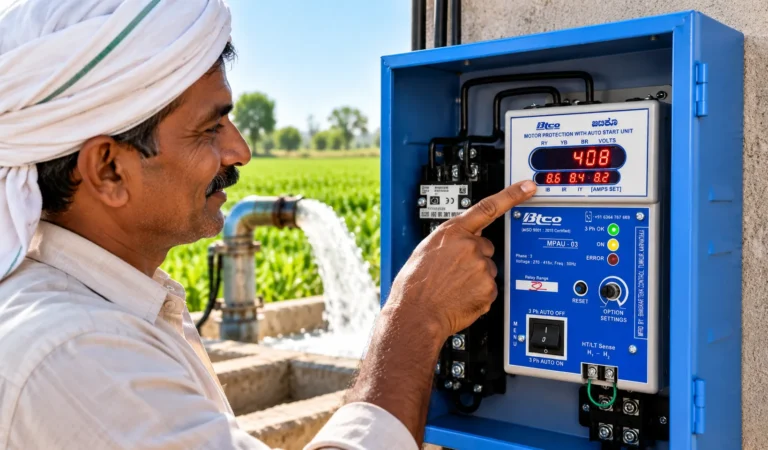
Overload protection watches the current. When it stays too high for too long, the starter switches the motor off before the heat does damage. On a BTCO starter the display shows Overload Trip, so you know why it stopped. The trip itself is not the problem; it is the starter doing its job. (See what every BTCO starter message means.) The problem is whatever made the motor draw too much current.
7 reasons your submersible motor trips on overload
1. Low, high or unbalanced voltage
On low voltage, the motor pulls more current to do the same work. When the three phases are unequal, one phase carries more current than the others. Both show up as overload.
Signs: The motor trips more in the evening or at peak pumping season, and the volts on the display are low or uneven between phases.
Fix: Check the voltage on all three phases at the starter when the motor is running. BTCO starters trip on current, so they give voltage fluctuation protection and stop the motor before a voltage swing burns it.
2. Single phasing (a phase missing)
If one phase is lost, from a blown fuse, a cut wire or a burnt jumper, the motor tries to run on two phases and draws far more current on them.
Signs: One phase light is off, the motor hums, the water flow drops.
Fix: Find and fix the missing phase. Every BTCO 3 phase starter is a single phasing preventer: it stops the motor with Mains Problem on the display before the current builds up.
3. Sand, mud or a jammed pump
Sand and silt from the borewell drag on the impeller or jam it. The motor has to push harder and the current climbs.
Signs: Muddy or sandy water, a grinding noise, and trips soon after starting.
Fix: Get the pump pulled and cleaned, and check the borewell. Don’t keep restarting a jammed pump: each start draws a heavy current.
4. The overload setting doesn’t match the motor
If the trip amps are set too low, the starter trips on a healthy motor. Set too high, it lets a struggling motor run until it burns.
Signs: Trips with no other sign of trouble, or a motor that burnt without the starter ever tripping.
Fix: Compare the setting with the motor’s normal running current. BTCO DOL, star delta and Combined starters learn the motor’s healthy current the first time they are connected and set the trip amps by themselves; if you need to reset it, the video below shows how.
5. A cable that is too thin, too long or badly joined
A thin or very long cable, or a loose joint, drops voltage on the way down to the motor, so the motor sees low voltage and draws more current. A bad joint can also leak current.
Signs: Voltage at the starter looks fine but the motor still struggles, or the joint gets warm.
Fix: Have an electrician check the cable size for your HP and depth, and every joint. BTCO starters also protect against cable and kit faults and leakage.
6. Worn bush and bearings
As the bush and bearings wear, the shaft drags, friction grows and the motor needs more current to turn.
Signs: The amps creep up slowly over weeks or months, and the motor gets noisier.
Fix: Watch the amps on the digital display. If they keep rising, get the motor serviced before it fails.
7. A starter box in direct sun
In old starters with a thermal relay, the relay itself heats up in the sun and trips early, even on a healthy motor.
Signs: Trips in the hot afternoon, not in the morning.
Fix: Fit the starter in the shade with some air around it. Electronic starters like BTCO measure the current itself, so the trip doesn’t depend on how warm the relay is.
What to check first, in order
Start with the easy checks at the starter, then move to the borewell. On a phone, swipe the table sideways.
| What you see | Check first | Then |
|---|---|---|
| Trips in the evening or peak season | Voltage on all 3 phases while the motor runs | Call the electricity line staff if the voltage stays low |
| One phase light off, Mains Problem | Fuses and wires on the line | Wait for the phase to come back; the starter restarts if the auto switch is ON |
| Trips soon after starting, sandy water | Amps against the motor nameplate | Pull and clean the pump |
| Trips with no other sign | The motor and its current | The starter sets the trip amps itself; watch our overload video |
| Amps creeping up over months | Motor noise and running amps | Service the bush and bearings |
| Motor still struggles with good voltage | Cable size and joints | Electrician tests cable and motor insulation |
Why you shouldn’t keep resetting
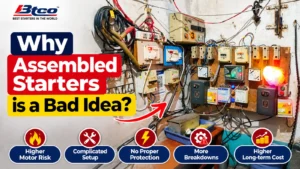
Each trip means the winding got hot. Restarting right away heats it again before it has cooled, and the damage adds up even if the motor seems to run fine. Many motors that “suddenly” burn had been tripping on overload for weeks. If the motor trips twice, find the cause before you start it again. Read more about why submersible motors keep burning.
How BTCO starters handle overload
- Overload protection in every model: the DOL-03, FASD-03 star delta, Combined DOL, Combined star delta, Single Phase and MPAU all trip on overload and show Overload Trip on the display.
- Sets itself: the DOL, star delta and Combined starters learn the motor’s healthy current when first connected and set the trip amps automatically. You don’t need to set anything; if you have questions, watch our videos below.
- The Single Phase starter tries once more by itself 10 minutes after an overload trip.
- More than overload: dry run, single phasing, voltage fluctuation, earth fault, current imbalance and cable fault protection. See them all in the submersible motor protection guide.
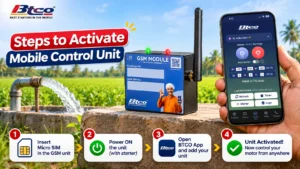
- Alerts on your phone: with the BTCO GSM Module, the BTCO app tells you the moment the motor trips on overload, and you can change the trip amps from your phone.
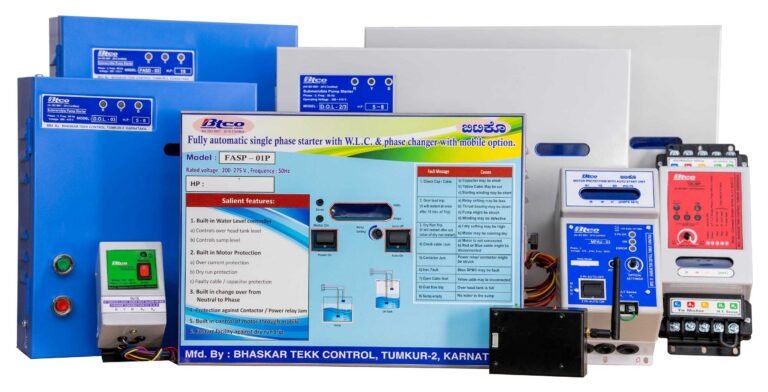
Not sure which starter your motor needs? See which starter your motor needs or download the brochures.
Frequently asked questions
Why does my motor trip on overload after a few minutes?
The motor is drawing more current than it safely can. The usual reasons are low or unequal voltage, a missing phase, sand or a jammed pump, a cable that is too thin or badly joined, or worn bearings. Check the voltage on all three phases and the running amps first.
What overload setting should I use?
BTCO DOL, star delta and Combined starters set it automatically: they learn the motor’s healthy current the first time they are connected, so you don’t need to set anything. If you have questions, watch our overload video and the others on our product videos page.
Can low voltage cause an overload trip?
Yes. On low voltage the motor draws more current to do the same work, and the starter trips on overload. BTCO starters trip on current, so they protect the motor from voltage fluctuation in the same way.
Can sand in the borewell cause overload?
Yes. Sand and silt drag on the pump’s impeller or jam it, so the motor draws more current. Get the pump cleaned before restarting it again and again.
Is it safe to keep resetting the starter after an overload trip?
No. Each trip means the winding got hot, and restarting again and again adds up the damage until the motor burns. If it trips twice, find the cause first.
How do I get an alert when my motor trips?
Fit the BTCO GSM Module to your starter. The BTCO app then sends you an alert the moment the motor trips, with the reason, such as Overload Trip or Dry Run Trip.
Motor still tripping? Talk to us
Call or WhatsApp us with your motor’s HP, the amps on the display and when it trips, and we’ll help you find the cause. Or visit your nearest BTCO Starters dealer. More answers in our motor starter FAQ.