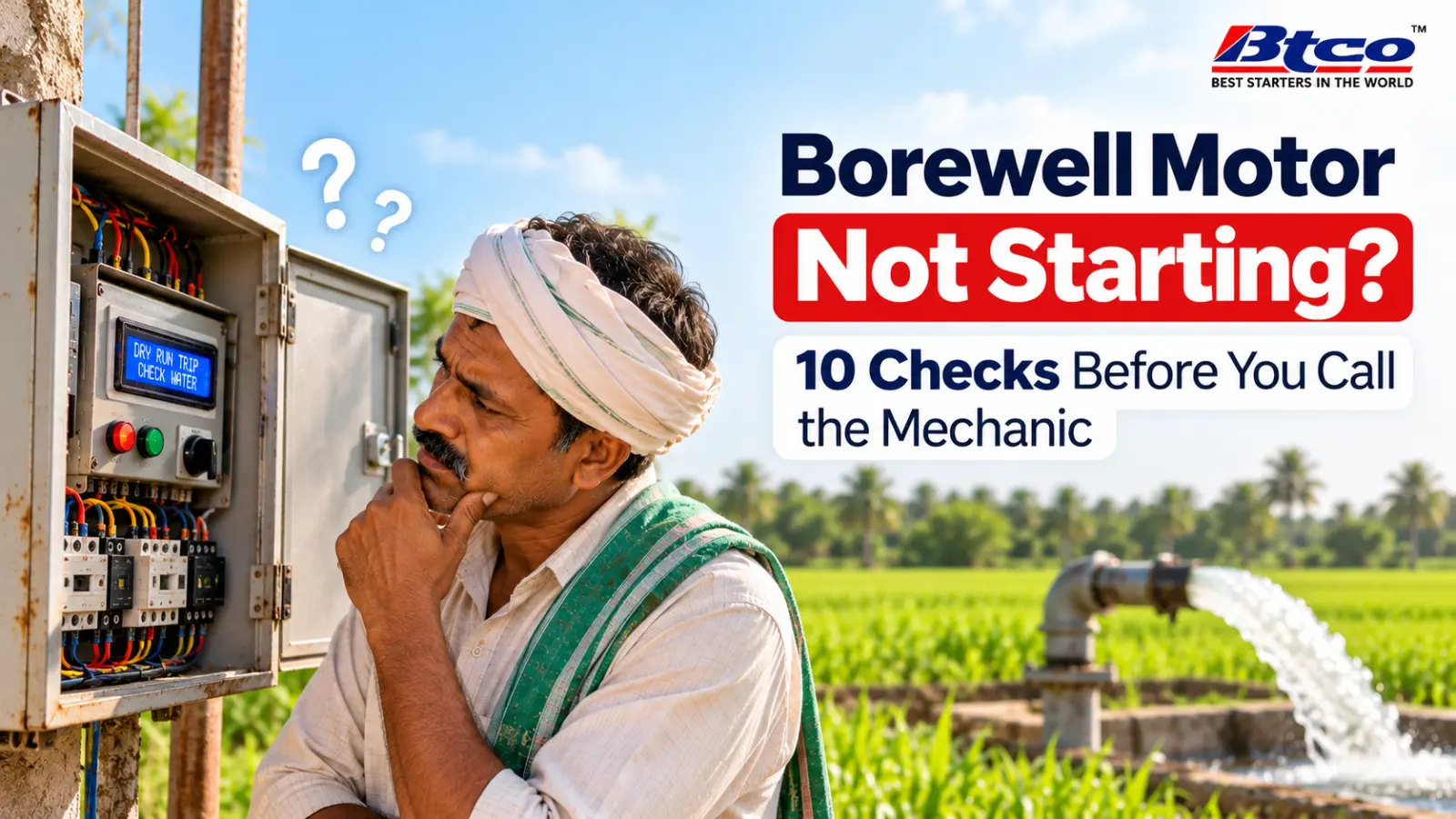
You switch on the borewell and nothing happens. Or the motor hums but no water comes, or it starts and stops again. Before you pull the pump out or call the mechanic, go through these 10 checks, in order. The first ones you can do yourself in a few minutes, often from your phone. And one rule matters more than any other: don’t keep pressing START again and again. Restarting a motor that has a fault is how motors burn.
Safety first: switch off the mains before you open the starter or touch any wiring. For anything inside the starter, the motor or the cable, call a qualified electrician or your BTCO dealer.
Quick check: what do you see?
On a phone, swipe the table sideways.
| What you see | Most likely reason | Go to |
|---|---|---|
| Starter display is blank, no lights | No power reaching the starter | Check 1 |
| One of the three phase lights is off | A phase is missing on the line | Check 2 |
| Display shows a message (Dry Run Trip, Overload Trip…) | A protection stopped the motor | Check 3 |
| Power is there, no message, motor still off | The starter is waiting: start delay, dry restart time, timer or auto switch | Checks 4–6 |
| Motor hums but doesn’t turn, or trips at once | Low voltage, jammed pump, capacitor or cable problem | Checks 7–10 |
Checks you can do yourself
1. Is the power really there?
Farm feeders get 3 phase power only in shifts, and the timing changes. If the starter’s display is blank, the power may simply not have come yet, or a fuse or MCB before the starter has gone. Check whether the neighbours’ pumps are running, then check the fuses at the pole and the main switch. If your pump runs on night power, read how to run your borewell on night power without going to the field.
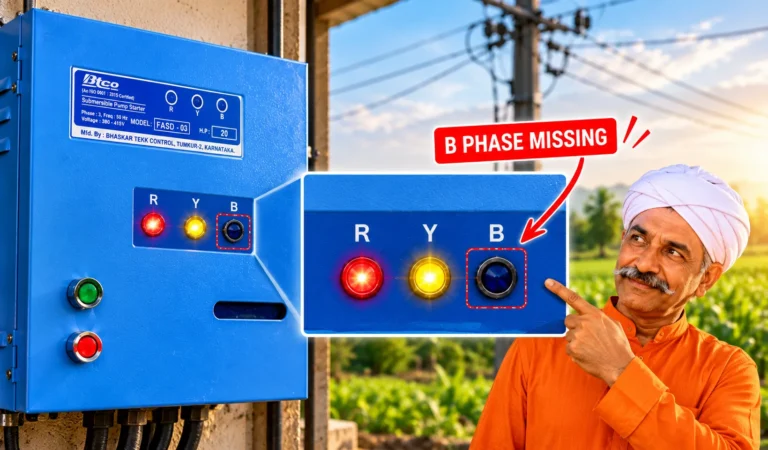
2. Are all three phase lights on?
A 3 phase motor needs all three phases. If one phase light on the starter is off, a fuse has blown, a wire is cut or a jumper has burnt on the line. A BTCO starter won’t start the motor on two phases, because a motor running on two phases can burn in minutes. It shows Mains Problem and waits. When all three phases come back, it starts the motor again by itself if the starter’s auto switch is ON. This is single phasing protection at work.
3. What does the starter’s display say?
If the display shows a message, the starter has already told you why the motor is off. That’s usually good news: a protection worked and stopped the motor before it burnt. The common ones:
- Dry Run Trip: the borewell ran low. Nothing is broken; the starter tries again after the dry restart time. See dry run protection.
- Overload Trip: the motor pulled too much current. Don’t keep resetting it; follow our overload tripping guide.
- Ground / Imbalance or Check Cable / Kit: call an electrician. These point to the earthing, the cable or the motor.
- Overflow Trip or Sump Empty (Single Phase Domestic): the tank is full or the sump is empty. See the water level controller.
Every message, with a video for each, is in BTCO starter error messages: what they mean and what to do.
4. Is the starter just waiting?
An automatic starter doesn’t always start the motor the second the power comes. A BTCO starter waits on purpose:
- Start delay: after the power comes, it waits a few seconds so the motor doesn’t start during the voltage dip when every pump in the village switches on.
- Dry restart time: after a dry run trip, it waits for the time you set so the borewell can refill.
Give it a few minutes before you decide something is wrong.
5. Is the auto switch ON, and is a timer running?
If the auto switch is OFF, the starter won’t start the motor by itself when the power comes. If your starter has a timer, the motor may be off because the timer has finished, the cyclic timer is in its OFF time, or the RTC timer’s start time hasn’t come yet. Check the timer settings, and that the starter’s clock shows the right time.
6. Did someone switch it off from the app?
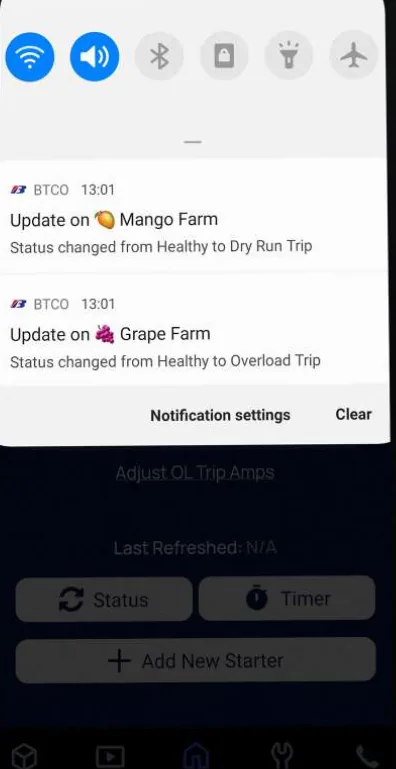
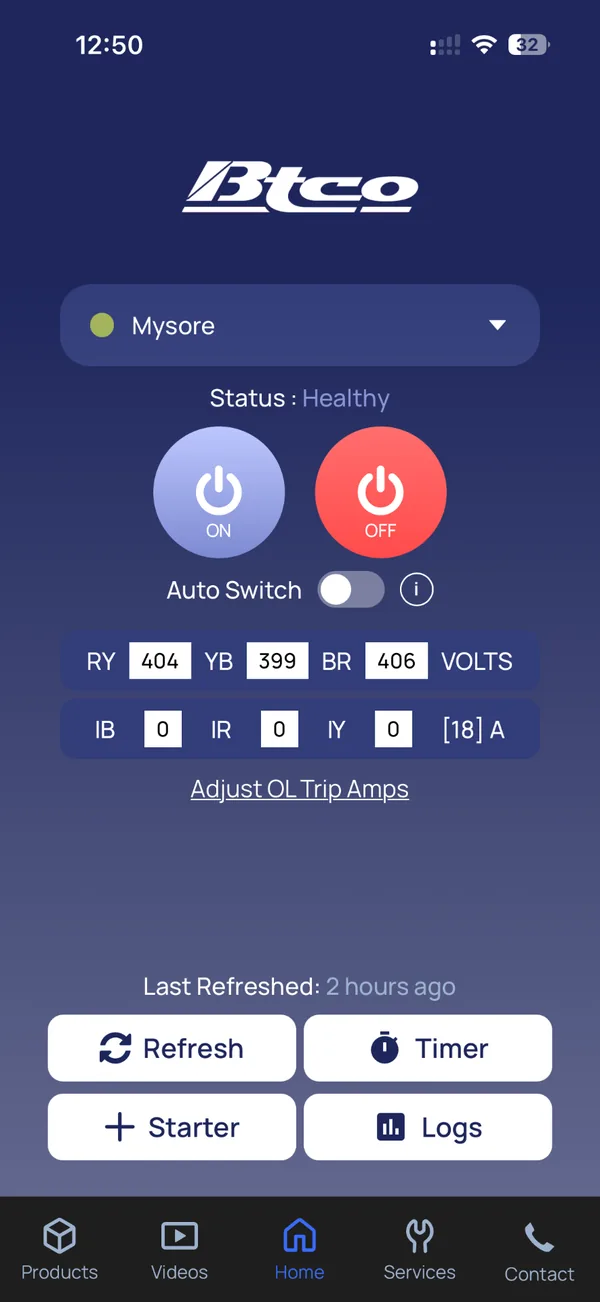
With a mobile starter, anyone added as a user can switch the motor OFF from their phone. Open the BTCO Starters app: it shows whether the motor is ON or OFF, the voltage and current, and 7 days of motor logs, so you can see what happened and when. It also shows the trip reason, so you can often skip the walk to the field.
Checks for your electrician
If checks 1 to 6 don’t explain it, the problem is in the supply, the pump, the cable or the motor. These need an electrician. Tell them what the starter’s display showed: it saves them time.
7. Is the voltage too low?
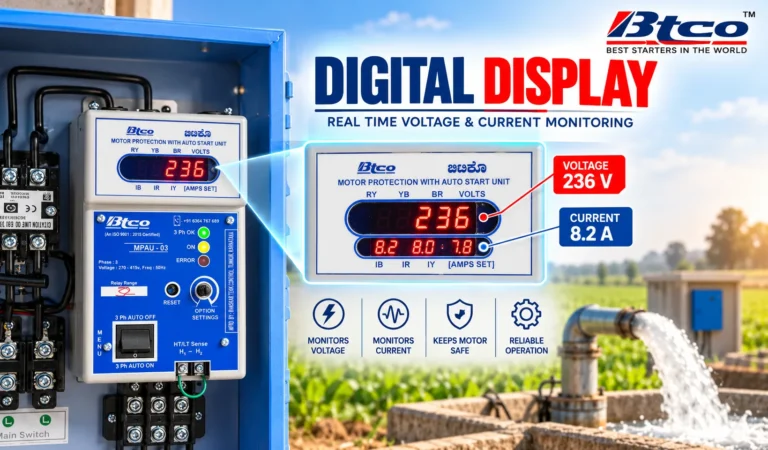
Look at the voltage on the starter’s display. When the voltage is very low, the motor pulls a lot of current, hums and struggles to turn. A BTCO starter trips on current, so it stops the motor instead of letting it cook. Wait for the voltage to come back up rather than forcing a start. See voltage fluctuation protection.
8. Is the pump jammed with sand?
Sand or silt can lock the pump, especially in a new borewell or after the pump has stood idle for a long time. The motor hums, pulls very high current and trips on overload straight away. The pump has to come out to be cleaned. On the Combined starters, a stalled motor on 2 phase or juice line shows Rotor Lock Trip.
9. Is a capacitor weak? (Single phase and Combined starters)
Single phase motors, and 3 phase motors running on juice line through a Combined starter, need capacitors to start. A weak or failed capacitor leaves the motor humming without turning. The BTCO single phase starter shows Check Cap/Cable, and the Combined starters show Check Capacitor. Your dealer or electrician will check and replace the capacitor.
10. Is the cable or the motor winding damaged?
A cut or water-damaged cable joint, or a winding that has already burnt, will stop the motor. The starter shows Check Cable / Kit or Ground / Imbalance. The electrician will test the cable and the motor’s winding from the top, before anyone pulls the pump out. If the motor has burnt, find out why before you put a rewound motor back: read why submersible motors keep burning, and how to stop it.
Never bypass the starter to “just get it running”
When the motor won’t start, it is tempting to connect it straight to the line, or to keep resetting the starter until it runs. Don’t. The starter is stopping the motor for a reason: a missing phase, low voltage, a dry borewell or a jammed pump. Forcing the motor to run through any of these is the fastest way to burn it. A starter that refuses to start your motor is protecting it. Find the reason first.
A starter that tells you why saves a trip
With an ordinary starter, “motor not starting” means guessing. Every BTCO starter shows the voltage, the current and the reason for every trip on its display, and with the BTCO GSM Module it sends that reason to your phone. All BTCO starters also protect against dry run, single phasing, overload and voltage fluctuation, so when something goes wrong, the motor stops before it burns.
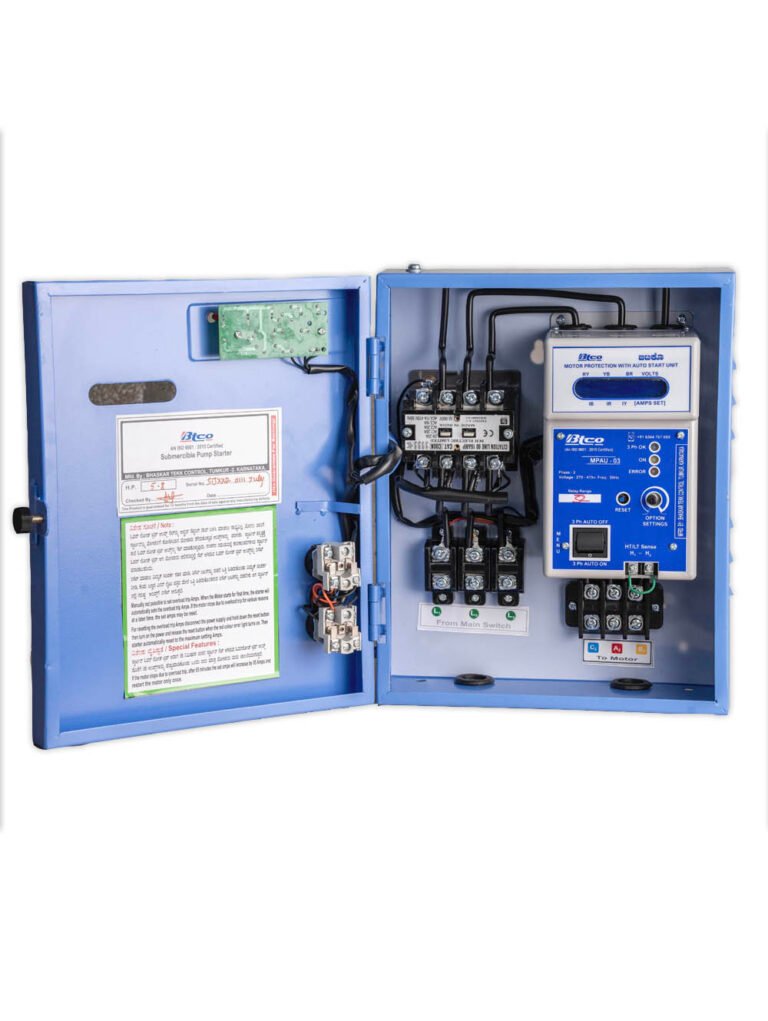
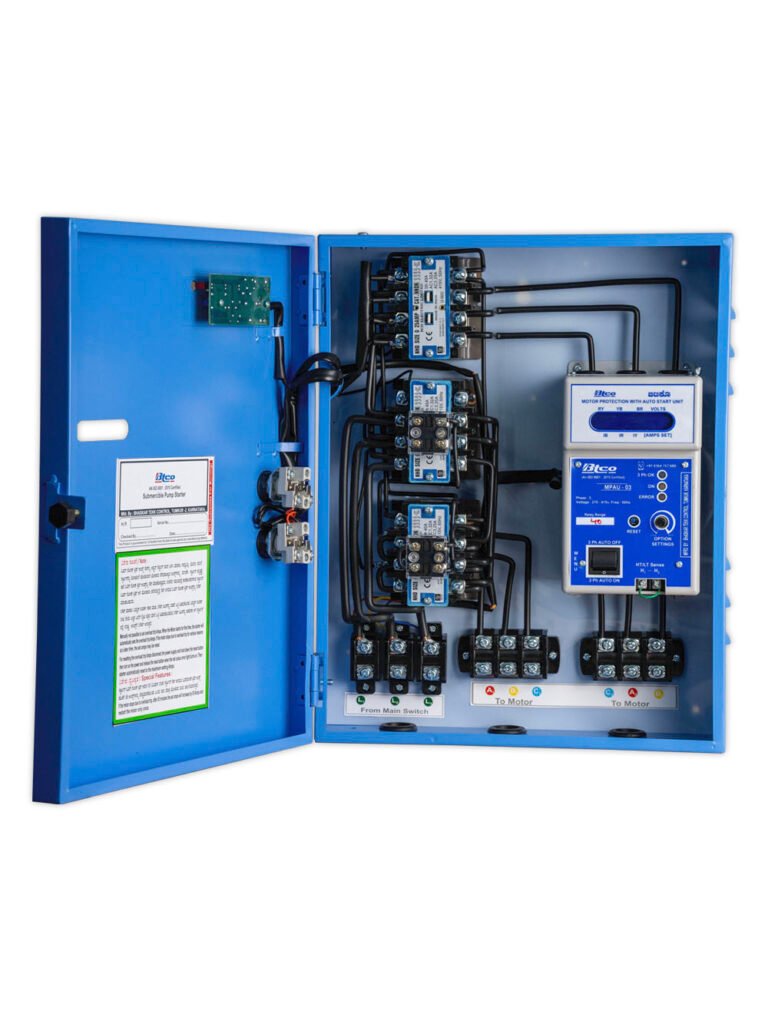
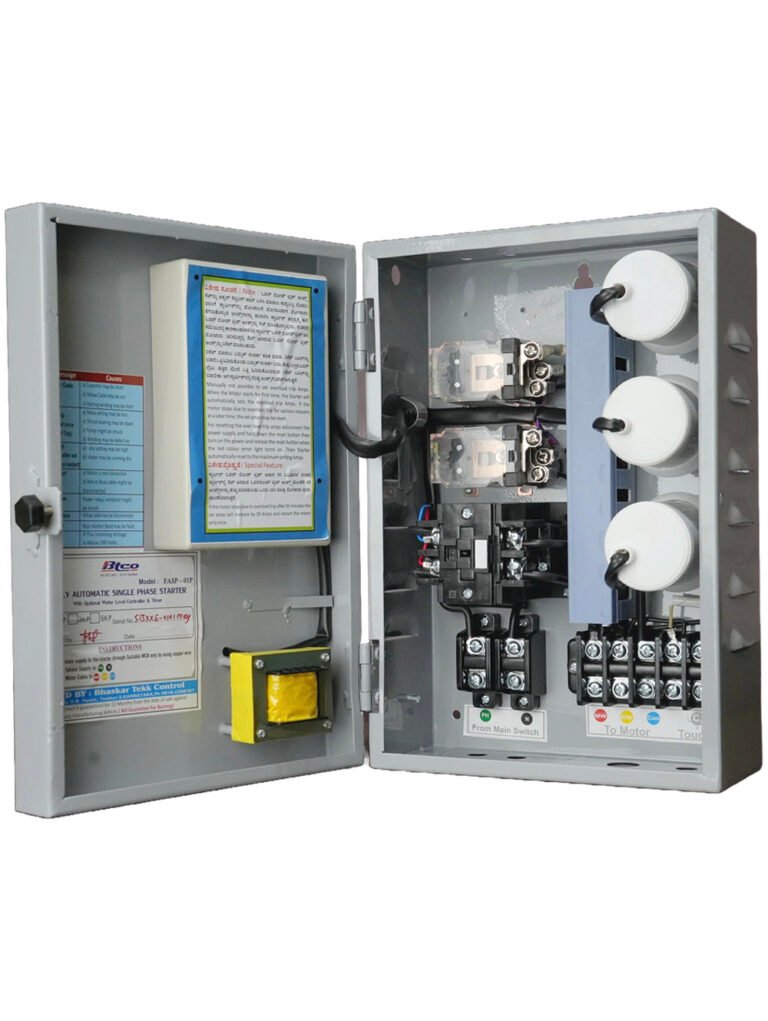
Not sure which starter your motor needs? Answer a few questions in the starter finder.
Frequently asked questions
Why is my borewell motor not starting even though the power is there?
First check that all three phase lights on the starter are on. If one is off, a phase is missing and the starter won’t start the motor on two phases. Then read the starter’s display: a message such as Dry Run Trip or Overload Trip tells you why it stopped. If there is no message, the starter may be waiting (start delay or dry restart time), the auto switch may be OFF, or a timer may have finished.
Why does my submersible motor hum but not start?
A motor that hums without turning is usually getting too little voltage, is jammed with sand, or (on single phase and juice line) has a weak capacitor. Switch it off instead of trying again and again: a humming motor pulls very high current and heats up fast. A BTCO starter trips on current, so it stops the motor before it burns.
Why doesn’t my automatic starter start the motor when the power comes?
A BTCO starter waits a few seconds after the power comes (start delay), and after a dry run trip it waits for the dry restart time you set. Check that the auto switch is ON. After a Mains Problem trip, the starter restarts the motor by itself only if the auto switch is ON.
Why does my motor start and then stop again?
The starter is tripping on a protection. Read the message on the display: Dry Run Trip means the borewell is running low, Overload Trip means the motor is pulling too much current. Find the cause before you reset it, because restarting a motor with a fault again and again is how motors burn.
How do I know if my submersible motor is burnt?
An electrician can test the motor’s winding and insulation from the top, through the cable, before the pump is pulled out. Signs include a starter that trips at once with Ground / Imbalance or Check Cable / Kit, a burning smell at the starter, or the MCB tripping as soon as the motor starts.
Can I connect the motor directly and bypass the starter?
No. The starter stops the motor because something is wrong: a missing phase, low voltage, a dry borewell or a jammed pump. Running the motor straight from the line through any of these is the fastest way to burn it. Find and fix the reason first.
Still not starting? Talk to us
Call or WhatsApp us with what the starter’s display shows, your motor’s HP and your power supply. We’ll tell you what to check next, or send you to your nearest BTCO service centre. More answers in our motor starter FAQ.
More videos on our videos page. Follow BTCO Starters on YouTube, Instagram and Facebook.