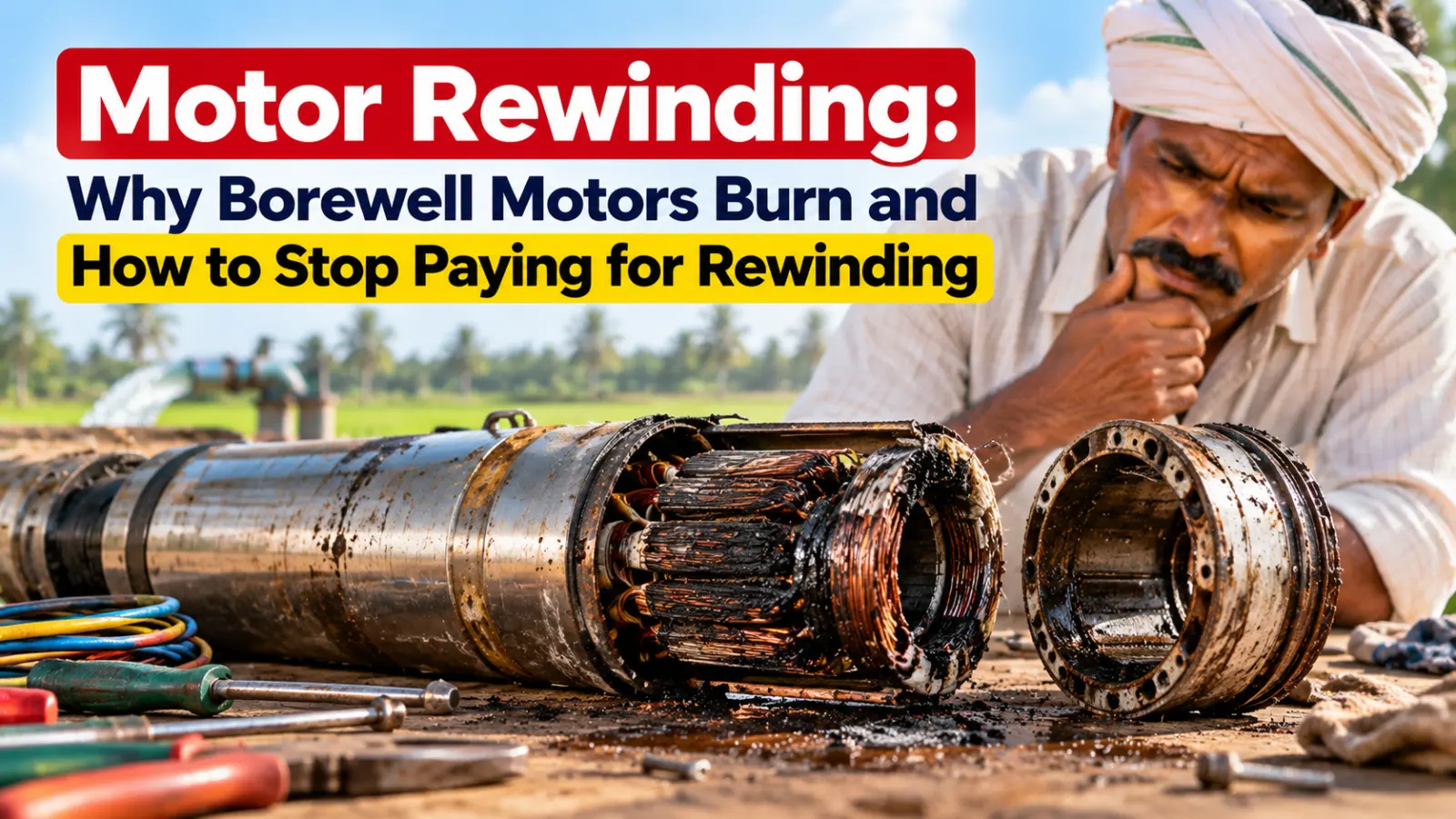
For many farmers, motor rewinding (ಮೋಟಾರ್ ರಿವೈಂಡಿಂಗ್) is almost a yearly expense. The motor burns, the pump is pulled out of the borewell, the motor goes to the rewinding shop, the crop waits for water, and a few months later it happens again. Rewinding fixes the burnt motor, but it doesn’t fix the reason it burnt. Here is what rewinding is, why borewell motors burn, and how to stop paying for the next rewind.
What is motor rewinding?
A submersible motor has copper wire coils inside it, called the winding. The wire is covered with thin insulation. When the motor gets too hot for too long, that insulation burns and the coils short against each other, and the motor stops working. That is a “burnt motor”.
Rewinding means taking the motor apart, removing the burnt copper winding, winding new copper wire into the slots, insulating and varnishing it, and putting the motor back together. It is skilled work, done in a rewinding shop.
The real cost of a burnt motor
The rewinding bill is only part of it. Every burnt borewell motor also means:
- Paying a crew to pull the pump out of the borewell and lower it back again.
- Days without water while the motor is at the shop, often in the hottest weeks, when the crop needs it most.
- New cable joints, and sometimes damaged pipes or a lost pump.
- A rewound motor that may not run quite as well as before, depending on the quality of the work.
And if the cause is still there, the rewound motor burns again.
Why borewell motors burn: the 6 usual causes
Almost every burnt motor comes down to one thing: the winding got too hot. These are the usual reasons:
| Cause | What happens in the motor | What stops it |
|---|---|---|
| Dry run | No water flowing to cool the motor | Dry run protection |
| Single phasing (a missing phase) | The motor runs on two phases with very high current | Single phasing protection |
| Voltage fluctuation | Low voltage makes the motor pull more current | A starter that trips on current |
| Overload or a jammed pump | Sand or a stuck pump makes the motor struggle | Overload protection |
| Earth leakage or a damaged cable | Current leaks through a weak joint or insulation | Grounding and cable fault protection |
| Starting again and again | Each start heats the winding | A starter that waits (start delay, dry restart time) |
The full story, with signs to look out for, is in why your submersible motor keeps burning.
Before you put the rewound motor back
Don’t lower a freshly rewound motor into the same borewell with the same problem waiting for it. First:
- Find out why it burnt. Ask the rewinder what they saw: all coils burnt evenly (often overload, low voltage or dry run), or only one or two phases burnt (often single phasing).
- Check the cable and joints before lowering the pump. A weak joint under water is a common hidden cause.
- Check the earthing at the starter. See earthing for borewell starter and motor.
- Check the starter. An old starter with no dry run or single phasing protection will let it happen again.
How a starter stops the next rewind
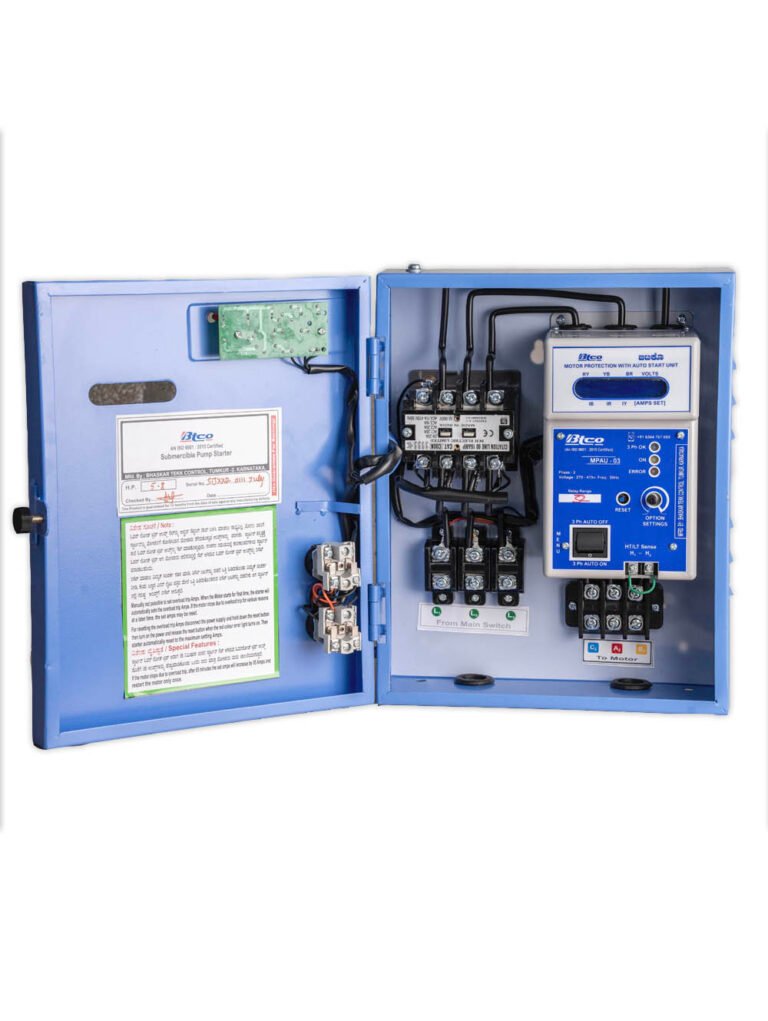
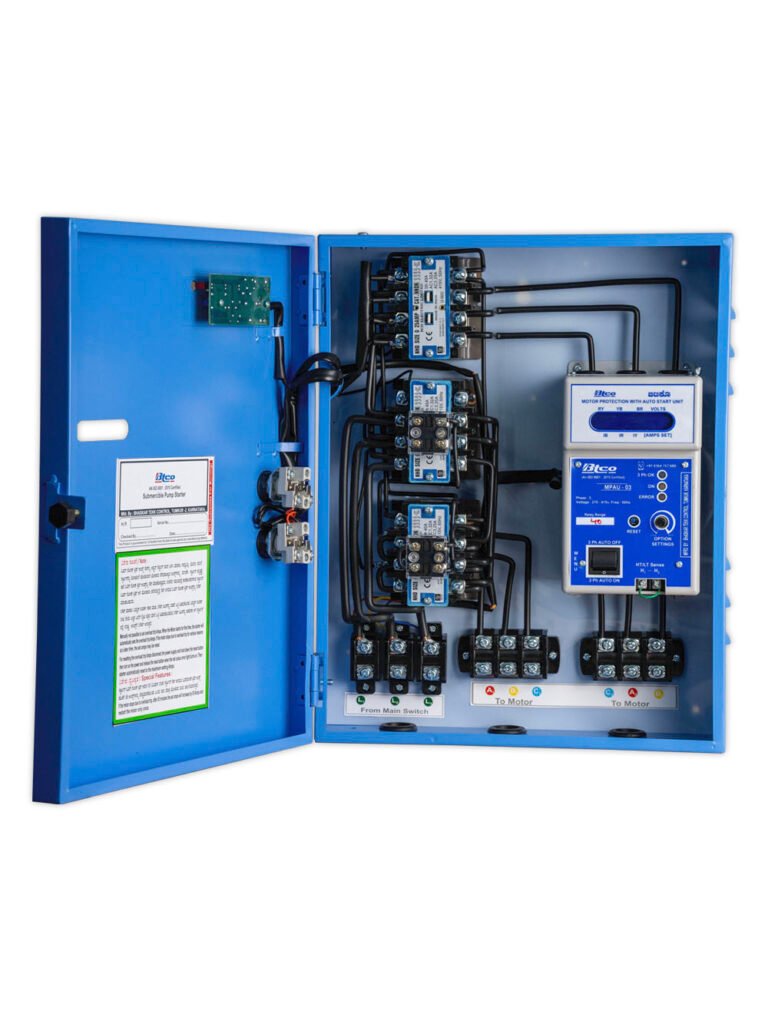
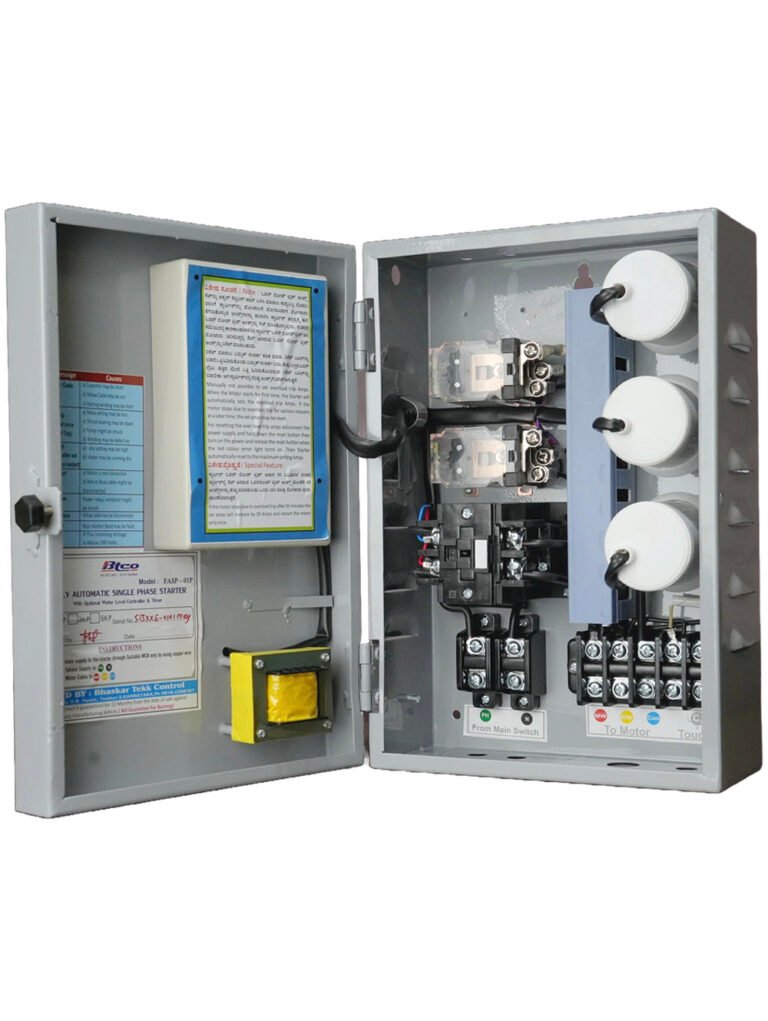
A starter that only switches the motor ON and OFF can’t save it. A protecting starter watches the motor all the time and stops it before the winding gets hot enough to burn:
- Every BTCO starter has dry run, single phasing (3 phase), overload, voltage fluctuation, grounding and cable fault protection built in.
- It shows the reason for every trip on its display, so you know what went wrong instead of finding a burnt motor.
- With the BTCO GSM Module, the trip reason comes straight to your phone.
A protecting starter cannot repair worn bearings or a damaged cable, but it stops the motor before such a fault turns into a burnt winding, and it tells you to call the electrician.
Not sure which starter your motor needs? Use the starter finder.
Frequently asked questions
Why does my borewell motor need rewinding again and again?
Because the cause of the burning is still there. Dry run, a missing phase, low voltage, overload and cable faults all overheat the winding. Rewinding fixes the burnt winding but not the cause. Fix the cause and fit a starter with dry run, single phasing, overload and voltage fluctuation protection before you lower the rewound motor.
What is motor rewinding?
Removing the burnt copper winding from a motor and winding new copper wire in its place, then insulating, varnishing and reassembling the motor. It is done in a motor rewinding shop.
Is it worth rewinding a burnt submersible motor?
Often yes, but ask your rewinder: it depends on the motor’s age, size and how badly it is damaged. Whatever you decide, find and fix the reason it burnt first.
How can I tell what burnt my motor?
Ask the rewinder. If all the coils are burnt evenly, the usual causes are overload, low voltage or dry run. If only one or two phases are burnt, single phasing is a common cause. A BTCO starter shows the trip reason on its display, so next time you know before it burns.
Can a starter stop my motor from burning?
A protecting starter stops the motor before the winding gets hot enough to burn. Every BTCO starter protects against dry run, single phasing, overload, voltage fluctuation, earth leakage and cable faults, and shows the reason for each trip.
Stop paying for the next rewind
Call or WhatsApp us with your motor’s HP, your power supply and what happened when it burnt. We’ll suggest the right BTCO starter, or visit your nearest BTCO dealer.
More videos on our videos page. Follow BTCO Starters on YouTube, Instagram and Facebook.